Showing posts with label Edith Wharton. Show all posts

Friday, March 26, 2021

In Morocco by Edith Wharton

 "To step on board a steamer in a Spanish port, and three hours later to land in a country without a guide-book, is a sensation to rouse the hunger of the repletest sight-seer."
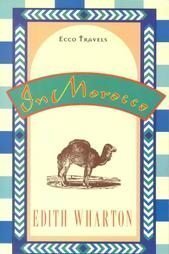


In September 1917, Edith Wharton traveled to Morocco. She spent a month there, making her way from Fez to Marrakech in a French military motorcar. She described the cities, detailed the architecture, reported on the ceremonies she viewed, and even included a brief sketch of Morocco's history. It's obvious she did her homework before embarking on this trip; she knew the names of key historical figures, the dates, and the important events in their lives. 
"To see Morocco during the war was therefore to see it in the last phase of its curiously abrupt transition from remoteness and danger to security and accessibility; at a moment when its aspect and its customs were still almost unaffected by European influences, and when the 'Christian' might taste the transient joy of wandering unmolested in cities of ancient mystery and hostility."
This is not an exciting or fast read. Though Wharton chronicles her trip by describing each city and place she visited with exacting detail, she's barely in the book herself. You get no sense of her, or of the people she travelled with, or met. The most exciting thing that happens is a sudden dust storm in Marrakech. Their visit to the Sultan's harem was interesting, too. But mostly this book left me wishing she'd written a fictionalized account of her trip to Morocco instead. That's a book I would love to read! Sadly, I did not love this travelogue. 

Wharton's fine writing does shine through in places however, like in these gems:
"If one loses one's way in Morocco, civilization vanishes as though it were a magic carpet rolled up by a Djinn."

"How can it seem other than a dream? Who can have conceived, in the heart of a savage Saharan camp, the serenity of this hidden place?"

I've owned this book for well over a decade, and now that I've read it, I'm glad I can finally take it off my TBR shelf where it's been gathering dust. I also get to count it as my Travel or Adventure Classic for Karen's Back to the Classics Challenge. So that's good, too.

Happy Reading!


Saturday, June 18, 2016

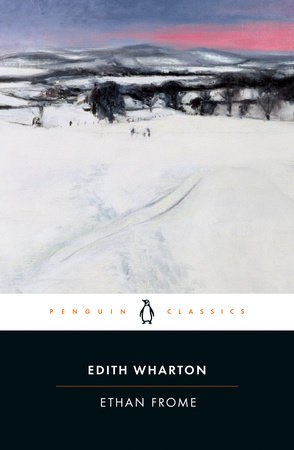
Ethan Frome

Ethan Frome drove in silence ... he seemed a part of the mute melancholy landscape, an incarnation of its frozen woe, with all that was warm and sentient in him fast bound below the surface; but there was nothing unfriendly in his silence. I simply felt that he lived in a depth of moral isolation too remote for casual access, and I had the sense that his loneliness was not merely the result of his personal plight ... but had in it the profound accumulated cold of many Starkfield winters.

As much as I love Edith Wharton's writing is how much I didn't love Ethan Frome the first time I read it. Which is why I felt the need to give it a second chance. It's not a long novel, and there are really only three main characters:  Ethan Frome, Zeena, his grim and ailing wife whose "fault-finding was of the silent kind", and Mattie Silver, his wife's younger cousin whose coming to their house to help Zeena out brought "a bit of hopeful life (that) was like the lighting of a fire on a cold hearth" to Ethan's dreary existence. The harsh Massachusetts winter also plays an important role in this tragic tale.

Ethan's life is a series of misfortune, struggle, and bad luck. Even his marriage is a disappointing mistake. Only in Mattie does he glimpse a sympathetic companion and the hope of some future happiness. But Zeena's penchant for "complaints and troubles" makes even that dream impossible. And that leads to tragedy. As I reread this book last week, I felt only sympathy for Ethan Frome. He deserved better than what he got, but life can be hard and unfair. This is such a sad novel, but it's so beautifully written. And while it will never be my favorite, I do like it more than I did. Mostly because of Wharton's artistry and skill--her writing is so stylish and elegant--but also because this second time reading Ethan Frome helped me to appreciate it, and him, a little bit more.

Happy Rereading!

Monday, February 9, 2015

Two Novellas

Edith Wharton was a keen observer of society and a chronicleer of her times. There's an elegance and a clarity to her writing that makes her one of my favorite authors. Her novels (and novellas!) are thoughtful, biting, artistic, witty, and often beautifully sad. Although not published until 1916, Bunner Sisters was written in 1892, making it one of Wharton's earlier works. It's the story of Ann Eliza and Evelina Bunner, two sisters who own a small shop in a shabbier part of New York.
"The Bunner sisters were proud of the neatness of their shop and content with its humble prosperity. It was not what they had once imagined it would be, but though it presented but a shrunken image of their earlier ambitions it enabled them to pay their rent and keep themselves alive and out of debt; and it was long since their hopes and soared higher."
Then they meet Mr. Herman Ramy, a German clockmaker, who awakens new hopes and dreams in both sisters. And for awhile their days are livelier and full of bright possibilities. But Ann Eliza soon realizes she must sacrifice her own happiness for that of her younger sister's.
"That night, after the light went out, the elder sister knelt longer than usual at her prayers. In the silence of the darkened room she was offering up certain dreams and aspirations whose brief blossoming had lent a transient freshness to her days. ... Grief held up its torch to the frail fabric of Ann Eliza's illusions, and with a firm heart she watched them shrivel into ashes..."
She hopes her own renunciation will be repaid in her sister's future joy. But life isn't that equitable, not for Ann Eliza and Evelina. These two sisters are not the wealthy elite of old New York that Wharton usually writes about. (And you definitely don't want to be single and poor in Wharton's world.) In the end, there are no gilded dreams for either Bunner sister.

I actually found this novella fairly depressing. My heart went out to Ann Eliza, but I found it harder to sympathize with self-absorbed Evelina. And while there were moments in this story that I loved, the ending left me feeling dissatisfied and wanting a little more. Which is why I found myself reaching for another of Wharton's novellas.


 Set in Paris, Madame de Treymes tells the story of American Fanny Frisbee, who is unhappily married to the Marquis de Malrive, and her childhood friend, John Durham, who has come to France to ask Fanny to marry him.  "She lifted a cleared gaze to his. 'My direct answer then is: if I were still Fanny Frisbee I would marry you.'" But the question of Fanny divorcing her husband is complicated by his family, his religion, and their son--an eight-year-old boy who neither side will give up. John turns to Madame de Treymes, Fanny's sister-in-law, for advice and help. But she wants something from him in return. 
She wanted money, a great deal of money: that was clear, but it was not the point. She was ready to sell her influence, and he fancied she could be counted on to fulfil her side of the bargain ... but he knew that ... she wanted the money for someone else..."
 And John's innate sense of honor revolts at the idea. He'd rather sacrifice his own happiness than do anything that would hurt Fanny.

This 72-page novella is really a clash of cultures: a rigid, very traditional, old French family vs. the unpolished but monied and moralistic Americans. More importantly, it's also a battle of happiness vs. honor, which is classic Edith Wharton. And maybe why I liked Madame de Treymes a little more than Bunner Sisters. But both novellas are beautifully written and well worth your time.

Happy Reading!

Thursday, January 23, 2014

First Classic of 2014

An Edith Wharton novel should be savored, not merely read. But then I'm biased. I've been a fan of Edith Wharton since I first saw The Age of Innocence. Over the years I've read my way through most of her novels, loving each one (except Ethan Frome). That's why I chose The Children as my first classic of 2014.


Once again Wharton has crafted some wonderfully memorable characters. First, there's Martin Boyne, a 46-year-old bachelor who "was doomed to blunder in his dealings with women, even when they were no more than little girls." Then there's the newly widowed Rose Sellars, Martin's longtime friend whom he's promised to meet in Cortina. Last, but not least, there are the seven Wheater children who Martin meets aboard a steamship sailing for Italy: Judith, Terry, Blanca, Bun, Beechy, Zinnie, and Chip. These irrepressible and irresistable children, with their multiple parents and step-parents, quickly draw Martin into the madcap drama of their lives.

When these same children decide to run away from their selfish society parents, they run straight to Martin. As the eldest, 15-year-old Judith explains her decision this way: "I brought the children away so that we wouldn't be separated again. If children don't look after each other, who's going to do it for them? You can't expect parents to, when they don't know how to look after themselves." And not even Rose's sensible objections can prevent Martin from involving himself heart and soul in their plight. Things get even trickier when Rose and Judith meet. It's a Wharton inevitability that Martin finds himself torn between these two women: one his dearest friend, the other a lovely but too-worldly wise young girl. (Don't worry, this is Edith Wharton we're talking about, not Nabakov.)

For me, this novel was bittersweet. I liked Martin and Rose and Judith. I wanted happy endings for all three, but...   I love the elegance of Edith Wharton's writing. And how sympathetic her characters are. (Except for the adult Wheaters and their former and current partners who are easy to despise.) I also admire Wharton's biting wit and her satirical (and often scathing) portrayal of society's meaningless manners and all its opulent inanity. Edith Wharton isn't just a storyteller; she's a truth teller. And in The Children she is at her best.