Showing posts with label Classic Novels. Show all posts

Friday, November 25, 2022

Last the best of all the classics...

 
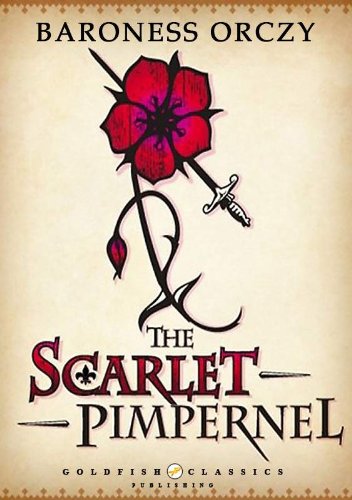
I've read some really good classics this year, but I think The Scarlet Pimpernel by Baroness Orczy is my favorite. It's such a fun adventure! Set in 1792 during the Reign of Terror, the story takes place in England and in France, both places I'd love to visit someday. (Which is why I chose this book for my "Classic set in a place you'd like to visit" for Karen's Back to the Classics Challenge.)

Lady Marguerite Blakeney and her husband, Sir Percy, are at the heart of this novel. She's beautiful, clever, and French. He's handsome, wealthy, and English. But though they had a passionate courtship, "Now they had drifted quite apart, and Sir Percy seemed to have laid aside his love her, as he would an ill-fitting glove. She tried to rouse him by sharpening her ready wit against his dull intellect; endeavored to excite his jealousy, if she could not rouse his love...but all in vain. He remained the same, always passive, drawling, sleepy, always courteous, invariably a gentleman..."

Added to the events of their life together in England, are the daring intrigues of the Scarlet Pimpernel, the mysterious and dashing Englishman who has rescued countless French aristocrats from the guillotine. His brave exploits are the talk of London. But who is he? Lady Blakeney is about to find out. 

I loved this book! It's captivating, amusing, clever, and diverting. And it reads fast. Why couldn't I have read this classic in high school? I'm so glad I read it now. It's the best.

Happy Reading!

Monday, October 31, 2022

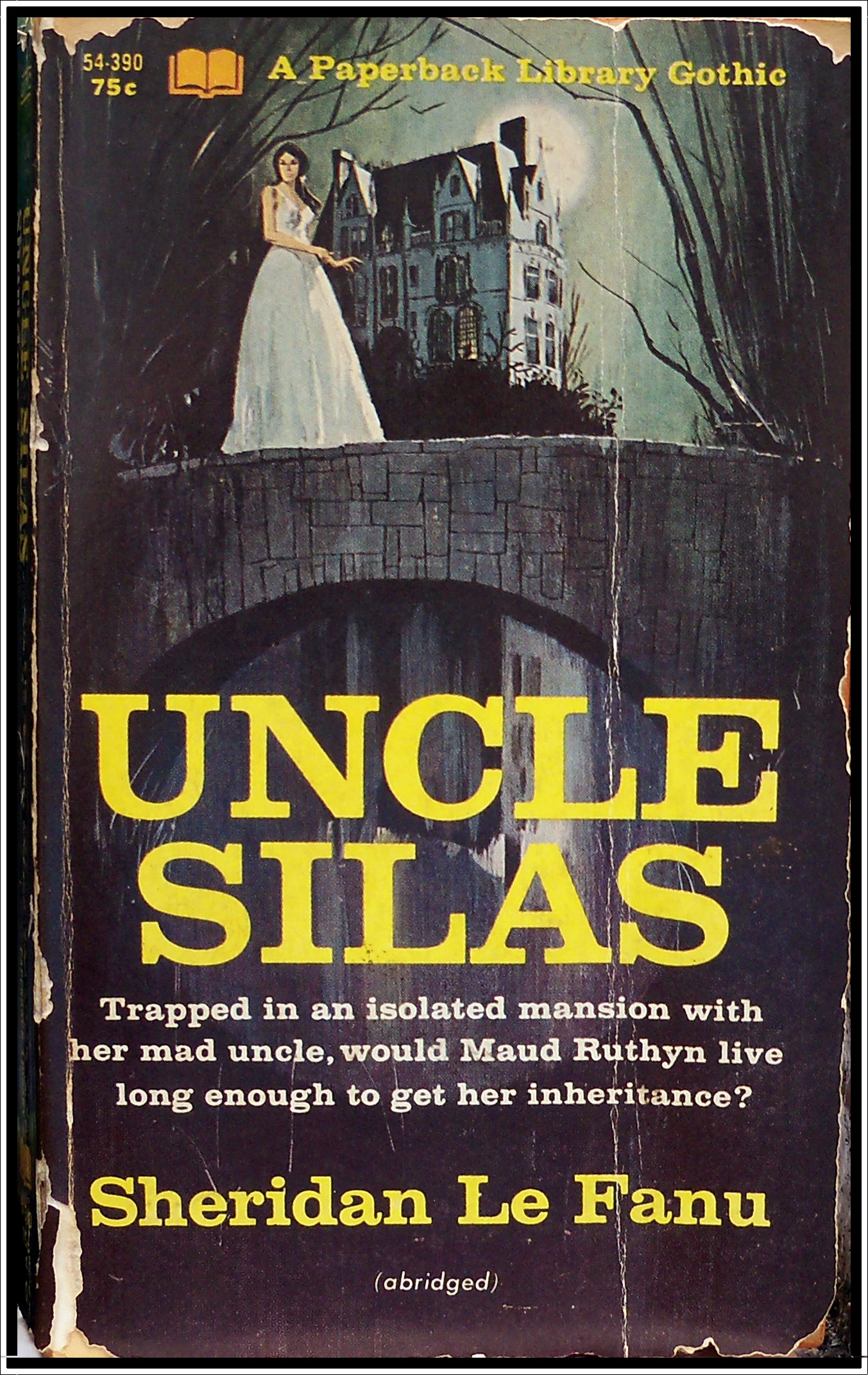
Uncle Silas by Sheridan Le Fanu

 
For my Wild Card Classic category in Karen's Back to the Classics Challenge, I decided to go with Sheridan Le Fanu's Gothic novel Uncle Silas, which was first published in 1864. It's a good example of Victorian sensation fiction, with thrills, chills, drama, secrets, death and danger, and is similar in feel to Wilkie Collins' novels. 

Seventeen-year-old Maud Ruthyn is the narrator and main character. She lives a quiet, pleasant life in the country with her father until his sudden death. She is then sent to live with her mysterious Uncle Silas, who her father named as her guardian, much to everyone's surprise. Silas, who was once accused of murder, is not a well man. He lives a very isolated life, and though he pretends to welcome Maud in, and to want what is best for her, he has many secrets of his own, as well as an unpredictable temper, and she can't help fearing him and his true intentions. 
"You would have fancied that one so young as I, born to wealth so vast, and living a life of such entire seclusion, would have been exempt from care. But you have seen how troubled my life was with fear and anxiety during the residence of Madame de la Rougierre, and now there rested upon my mind a vague and awful anticipation of the trial which my father had announced ... You perceive I had more spirit than courage. I think I had the mental attributes of courage; but then I was but a hysterical girl, and in so far neither more nor less than a coward." 

Though pretty, well-spoken and educated, Maud is at times also weak-willed, fearful, and naive; but then she's also very young. She befriends her rustic cousin, Millicent, but Millie is also afraid of her father. Maud fends off the advances of her other cousin, Dudley, but can't ever seem to stand up to her uncle. And when her former governess, Madame de la Rougierre, reappears on the seem, all hope of happiness seems lost to poor Maud. 

I have to say, even though this novel dragged a bit in the middle and felt a little long, I enjoyed reading it. I was rooting for Maud to find a way to free herself from her unhappy circumstances. And I liked the Gothic atmosphere that Le Fanu creates throughout the book, as well as his lyrical and descriptive prose. Like here: 
"It was late--just that hour when dejected people feel their anxieties most--when the cold grey of twilight has deepened to its darkest shade, and before the cheerful candles are lighted, and the safe quiet of night sets in."
This turned out to be a great October read. There's even a chilling twist at the end. I'm glad I chose this one as my Wild Card Classic novel. And I look forward to trying some of Le Fanu's other novels.

Happy Reading!
Wednesday, September 28, 2022

City Folk and Country Folk by Sofia Khvoshchinskaya


Summary from Goodreads:  "An unsung gem of nineteenth-century Russian literature, City Folk and Country Folk is a gentle yet devastating satire of Russia's aristocratic and pseudo-intellectual elites in the 1860s. Translated into English for the first time, the novel weaves an engaging tale of manipulation, infatuation, and female assertiveness that takes place one year after the liberation of the empire's serfs. Sofia Khvoshchinskaya centers her story on a commonsense, hardworking noblewoman, Nastasya Ivanovna Chulkova, and her self-assured daughter, Olenka, living on their small rural estate. Seventeen-year-old Olenka, who is unimpressed by class, ultimately helps her mother overcome a sense of duty to her "betters" and leads the two to triumph over their urbanite guests' financial, amorous, and matrimonial machinations."

My thoughts:  I first learned about this book from Kathy @ Reading Matters. (And if you want to read a really good review of this book, click on the link and read hers!) And I want to thank Kathy for bringing this Russian novel to my attention, because I quite enjoyed it. While not a lot happens plotwise, the interactions between Nastasya and Olenka and their two uninvited summer guests over the course of the novel are humorous. Nastasya is a bit silly, and worries way too much about offending her guests. Olenka, on the other hand, isn't at all cowed by the guests' station or status in society. 
"All of this was quite amusing to Olenka, who assumed that the present situation would not drag on forever and, most likely, would soon come to an end, but for Nastasya Ivanova there was nothing funny about it."

I liked Olenka's youthful candor and outspokenness and the way she makes her mother stand up to their guests at the end. I also thought Khvoshchinskaya did an excellent job contrasting the aristocratic pretentions and quirks of the two Muscovites against their more provincial hosts, while poking gentle fun at each one. Seligman Favorov's translation of this satirical novel is well done and very readable. All in all, this is an amusing novel and I'm glad I read it. Even better? It counts as my "Classic in Translation" for Karen's Back to the Classics Challenge. Only two more classics to go this year and I'll have finished all twelve categories!

Happy Reading!


Saturday, July 9, 2022

Another Classic...

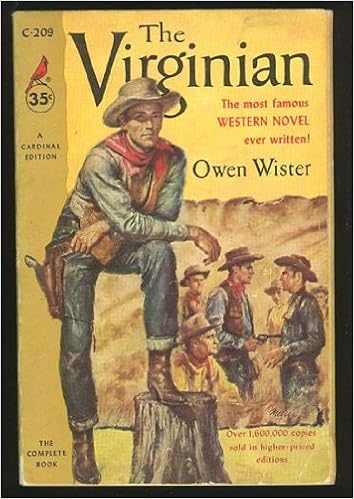
One of the twelve categories in Karen's Back to the Classics Challenge this year is "A Classic that's Been on Your TBR List the Longest". And originally, I planned on reading Anne Radcliffe's The Romance of the Forest, a book I bought years ago but never read. I even started it, but I just couldn't do it. Even though I liked both A Sicilian Romance and The Mysteries of Udolfo, I just couldn't get into this one. The text was too dense, the prose too wordy and boring. So I decided to switch books and read The Virginian by Owen Wister instead. 

This book is one my Dad owned, and one I've long wanted to read. And I ended up really liking it. Written in 1902, It's set in Wyoming in the late 1800s. The main character is known only as the Virginian (because that's where he's from). He's described as being a tall, lean gentleman with dark hair and a way with horses. He's got a soft Southern drawl and a wicked sense of humor. He's also nomadic, single, and happy with his life. Until he meets the new young schoolteacher from Vermont, Molly Wood. Once he sees her, his whole world changes. She does not feel the same way about him, at least not at first. Molly has a proud and independent spirit, but the Virginian is persistent and hard to resist. 

I thought this novel did an excellent job of capturing the spirit of the Old West, as well as depicting life as a cow-puncher in a mostly unsettled Wyoming. It's also a novel of friendship, honor, courage, courtship, and love. I was charmed by how the Virginian borrowed books from Molly to try and better himself, and how he really liked Shakespeare and the Russian authors, but couldn't relate to the books of Jane Austen. He's a memorable and very likable character. This whole book is quite entertaining and readable....and definitely better than The Romance of the Forest. 

Happy Reading! 

Other classic westerns I've read and enjoyed:
And any book by Louis L'Amour is always fun! 

Thursday, June 16, 2022

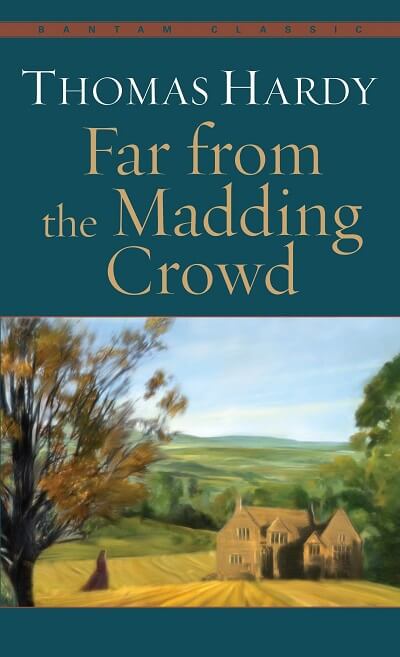
Far From the Madding Crowd by Thomas Hardy


This is the seventh novel by Thomas Hardy that I've read. If you've seen the movie, then you know that the two main characters are Bathsheba Everdene and Gabriel Oaks. Of the two, I thought Gabriel was the easiest to like. He's a simple, hardworking, unpretentious farmer when he first meets and proposes marriage to Bathsheba. But then his fortunes change, as do hers, and she ends up owning her uncle's large farm while Gabriel ends up working for her as her shepherd. There is no guile in Gabriel. He's solid and and steady and honest, though not exciting or handsome enough to tempt Bathsheba.

As for Bathsheba, she's a more complicated character. She's young and pretty and a little vain. She's also independent, spirited, and determined to hold her own in what is essentially a man's world. I admired her daring in deciding to run her uncle's farm on her own, but her youthful vanity made her do things at times that I didn't love, like when she sends an anonymous valentine to the handsome bachelor Farmer Boldwood to tease him just because he had the temerity not to notice her at the market-house. I guess there's nothing that draws a woman's attention like a man's indifference, at least in Thomas Hardy's world. Of course, when Boldwood then falls feverishly in love with her and asks her to marry him, Bathsheba finds she must refuse him because she does not love him back.

Sergeant Troy finishes the triangle of suitors encircling Bathsheba. He's handsome and charming and full of flattery. "He was perfectly truthful towards men, but to women lied like a Cretan." He also has another girl he's in love with, but he can't seem to stay away from beautiful Bathsheba. And Bathsheba, unable to resist his attentions, finds herself foolishly falling in love for the very first time. More drama then ensues. 

Almost all of the Thomas Hardy novels I've read seem to have a tragic ending, but while many tragic events do occur in this novel, there's actually a happy ending for both Bathsheba Everdene and Gabriel Oaks. Which made me like this one even more. Hardy's descriptive powers are also on full display in this novel. I like the way he writes, but sometimes his descriptions do slow down the narrative. Still, I'm very glad I finally read this one. Far From the Madding Crowd was first published in 1874 and counts as my 19th Century Classic for Karen's Back to the Classics Challenge.

Happy Reading!


Other Hardy novels I've reviewed on my blog:

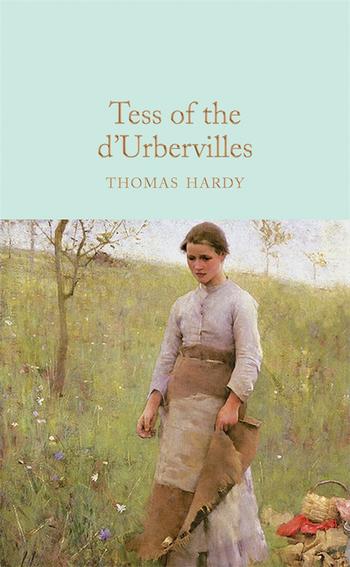
My three favorite Hardy novels:


Wednesday, April 6, 2022

The History of Miss Betsy Thoughtless by Eliza Haywood


What can I say about Betsy Thoughtless? She is a gentleman's daughter with two older brothers; she's also an orphan living with one of her trustees, Mr. Goodman, and his wife, Lady Mellasin, and her daughter, Flora. Betsy is pretty and vivacious and comfortably well-off. She's also proud and disdains being told what to do. By anyone. Many handsome young men vie for her attention, both honorable gentlemen and entitled scoundrels. And she enjoys the power her youth and beauty gives her over all of them, playing them off one another for her own amusement. 
"She played with her lovers, as she did with her monkey; but expected more obedience from them."
While not deliberately cruel, she is young, impulsive, self-absorbed and thoughtless. And very definitely NOT ready to marry. This book is a chronicle of her innocent indiscretions and frivolous follies. It's full of little dramas and small tragedies, from duels and assignations, to jealous friends, secrets and lies, and even several attempts at sexual assault. And Miss Betsy Thoughtless is at the center of them all. 
"She had a great deal of wit, but was too volative for reflection; and as a ship without sufficient ballast is tossed about at the pleasure of every wind that blows, so was she hurried through the ocean of life, just as each predominant passion directed."
This book is 600 pages long, which means I'm not even going to attempt to describe all that happens in it to Betsy. I will say that I found it very readable despite its length. Although I thought the plot, what there was of it, did get a little tedious after awhile. I probably would have liked it more if it had been edited down by 300 pages. And I wish I could say I liked Betsy for her spunk and independent spirit, but mostly I found her constant need to be amused at the expense of her gentleman callers, her thoughtless imprudence, and stubborn refusal to listen to the advice of Mr. Goodman or either of her two brothers when it came to her behavior, both tiresome and frustrating.  One thing I did love was all the crazy words like eclaircissement and raillery used throughout. But best of all? This is a book that has been sitting on my shelf gathering dust for years, and I finally get to check it off my TBR list! And since it was first published in 1751, this book also counts as my Pre-1800 Classic for Karen's Back to the Classics Reading Challenge. So, that's a double win! 

Happy Reading!


Similar, but better, reads:


Thursday, March 10, 2022

The Grapes of Wrath by John Steinbeck

     "I don't know what the country's comin' to," the fat man continued. His complaint had shifted and he was no longer talking to or about the Joads. "Fifty-six cars a folks go by ever' day, folks all movin' West with kids an' househol' stuff. Where they goin'? What they gonna do?"
    "Doin' the same as us," said Tom. "Goin' someplace to live. Tryin' to get along. That's all."


That just might be the theme of this novel: regular, ordinary people doing the best they can, "tryin' to get along", in a world where the cards all seem stacked against them. Just out of prison, Tom Joad comes home to find his family driven off the land they've farmed for generations. These sharecroppers are hard workers, but what are they without their land? So, they sell everything they own and set out for California, hoping to build a better life there. But there aren't jobs for them in California, at least not ones that pay enough for them to live on; and though they scrimp and scrabble, they never seem able to get ahead. Loss and tragedy seem to be their lot in life. 

In this novel, John Steinbeck skillfully depicts what life was like during the great Dust Bowl migration of the 1930s, as well as the hardships, hopes and defeats of the Joad family. At 455 pages, this isn't a fast read. But there's a rhythm to Steinbeck's prose that I really appreciate; it's almost poetic. Like in this paragraph:
"66 is the path of people in flight, refugees from dust and shrinking land, from the thunder of tractors and shrinking ownership, from the desert's slow northward invasion, from the twisting winds that howl up out of Texas, from the floods that bring no richness to the land and steal what little richness is there. From all of these the people are in flight, and they come into 66 from the tributary side roads, from the wagon tracks and the rutted country roads. 66 is the mother road, the road of flight."
Did I love this one? Not exactly. But only because the Joads' story is so sad. No matter how hard they try they never get ahead; things just keep going from bad to worse for them. And I hated the hopelessness of their journey. But I do like the way Steinbeck writes. He tells a powerful and sweeping story, and I can see why The Grapes of Wrath is considered a classic. And I'm very glad I read it. Written in 1939, this one counts as my 20th Century Classic for Karen's Back to the Classics Challenge.

Happy Reading!

Saturday, July 24, 2021

Another classic...


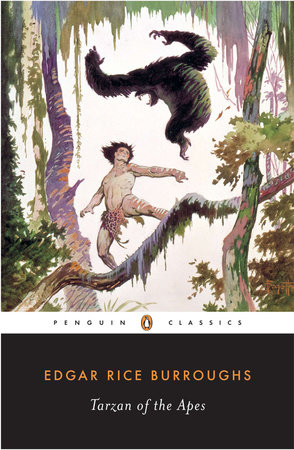
I remember my dad reading all of Edgar Rice Burroughs' Tarzan books when I was a kid, mostly because I thought the covers were cool, but also because I loved watching the animated TV series of Tarzan back in the day. I've seen several movie versions of Tarzan since, my favorite being The Legend of Tarzan with Alexander Skarsgard. 

So while I'd long been familiar with the general story of Tarzan, I'd never read any of Burroughs' original books. Then I saw there was a category for "A Classic About an Animal, or With an Animal in the Title" on Karen's Back to the Classics Challenge this year, and I immediately knew I wanted to read Tarzan of the Apes for it. And I'm so glad I did. 

It was written in 1914, so it has that distinctly old-fashioned narrative style, but it's still a very fun read. It chronicles how John Clayton, Lord Greystoke, and his wife, Alice, are marooned in Africa, how they lived, gave birth to a son, and then died, and how Kala, an anthropoid ape, raised Tarzan as her own. He grows up among the apes, but is never fully one of them. He knows and understands that animal instinct and savagery, but his higher intellect allows him to learn and think things the apes cannot--like how to use a rope and knife, and even how to read and write. And he struggles to find his place in the world--he may be Tarzan, King of the Apes, but he's very conscious that he's also a man. And he longs to develop that side of him.

The young Lord Greystoke was indeed a strange and warlike figure, his mass of black hair falling to his shoulders...the fire of life and intelligence in those fine, clear eyes... His straight and perfect figure told at a glance the wondrous combination of enormous strength with suppleness and speed. A personification, was Tarzan of the Apes, of the primitive man, the hunter, the warrior... But there was that which had raised him far above his fellows of the jungle--that little spark which spells the whole vast difference between man and brute--Reason. 

"Tarzan is not an ape."

I have to admit, my favorite parts of this book were in the second half when Tarzan first sees Jane, and when he saves her, and falls in love with her. I didn't love it quite as much when he loses her and has to follow her to America, only to lose her again for dumb but noble reasons on both his and Jane's part. (Which means he doesn't get together with Jane until the next book, The Return of Tarzan and, of course, my library doesn't have a copy of that one!) Despite that small annoyance, I did really enjoy reading this book. And I like Tarzan even more than I did before. Especially when he's with Jane.
From the trees Tarzan of the Apes watched the sweet face and graceful figure of Jane Porter. In his savage, untutored breast new emotions were stirring. ... But the girl, ah... He knew that she was created to be protected, and that he was created to protect her.


 Happy Reading!


Tuesday, September 10, 2019

Back to the Classics...

"It's really a very ordinary story, containing many longueurs and in places the style is very uneven. The author has a weakness for striking effects and resounding phrases. ... For all that, his story makes for easy reading. There's a plot, it makes sense and --most important of all-- it's original. ... And it does have some literary merit."

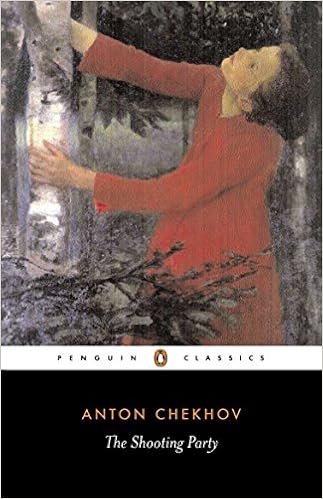
The Shooting Party by Anton Chekhov takes place over the course of a summer in and around the sleepy town of Tenevo, Russia. The main narrator, Sergey Petrovich Zinovyev, is an investigating magistrate. He's young and handsome, but he's also dismissive, careless, disdainful, and often cruel to his supposed friends. The dissolute, weak-minded and often drunk Count Karneyev is one of those friends, as is Urbenin, the Count's older, stolid estate manager. Not much happens besides some drunken revelry until the three men meet Olenka, the pretty forester's daughter, walking in the woods one day.
"...a girl of about nineteen, with beautiful fair hair, kind blue eyes and long curls. ... Poor little fair-haired girl! Did I imagine for one moment on that serenest of May nights, that she would later become the heroine of my troubled novel?"
That's when things change, with a sudden marriage, an adulterous affair (or two), and murder. There's even a plot twist at the end. Disenchantment, with life, with love, and even with one's self, seems to be the main theme of this novel. Chekhov writes well, but overall, this is a pretty depressing story. And none of the characters are very likable. Needless to say, this one won't make my favorite reads of 2019 list. But it does count as my Classic in Translation for Karen's Back to the Classics Challenge which makes me happy.

Happy Reading!

Sunday, June 2, 2019

Happy 179th Birthday, Thomas Hardy!

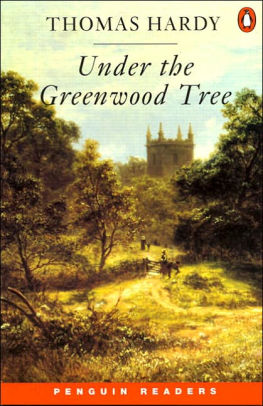
Under the Greenwood Tree is one of Hardy's earliest 'pastoral' novels. It was first published in 1872 and it centers around the inhabitants of Mellstock village, especially Dick Dewy, a member of the parish choir, Fancy Day, the pretty new schoolmistress, and Mr. Maybold, the young vicar. It's a study of village life ... and a romance, too. But while Hardy's writing and use of dialect are as good as ever, what this novel lacks is well-developed and likable characters to root for; even Dick and Fancy, the two main characters, lacked something. The other members of the parish choir had more personality than they did, but they were only peripheral players. And in the end, I didn't really care what happened to any of them. So while this particular Hardy novel lacks a tragic ending, it also lacks the depth and quality of his later, more well-known novels. But it does have a few good moments. Here are four of my favorites:

"I'm afraid Dick's a lost man," said the tranter. "There's too many o' them looks out of the winder without noticing anything: too much shining of boots -- too much looking at the clock: telling about clever things She did till you be sick of it, and then upon a hint to that effect a horrible silence about her. I've walked the path once in my life and know the country, neighbors; and Dick's a lost man!"

"If we be doomed to marry, we marry; if we be doomed to remain single we do," replied Dick.  

Three months had elapsed since Dick and Fancy had journeyed together from Budmouth, and the course of their love had run on vigorously during the whole time. There had been just enough difficulty attending its development, and just enough finesse required in keeping it private, to lend the passion an ever-increasing freshness on Fancy's part, whilst whether from these accessories or not, Dick's heart had been at all times as fond as could be desired. But there was a cloud on Fancy's horizon.

"How much you are to me depends upon how much I am to you," she said in low tones.

 Happy Reading!

P.S. This book counts as my 19th Century Classic for Karen's 2019 Back to the Classics Challenge.  But I'm kind of wishing I'd stuck to my original plan and read Return of the Native instead. Oh, well. Maybe next time.

Two other Hardy reviews:

Thursday, September 27, 2018

W. Somerset Maugham

"I have an idea that some men are born out of their due place.  Accident has cast them amid strangers in their birthplace, and the leafy lanes they have known from childhood remain but a place of passage.  They may spend their whole lives aliens among their kindred and remain aloof among the only scenes they have ever known.  Perhaps it is this sense of strangeness that sends men far and wide in the search for something permanent, to which they may attach themselves ... Sometimes a man hits upon a place to which he mysteriously feels that he belongs.  Here is the home he sought, and he will settle amid scenes that he has never seen before, among men he has never known, as though they were familiar to him from his birth.  Here at last he finds rest."  --W. Somerset Maugham,  The Moon and Sixpence

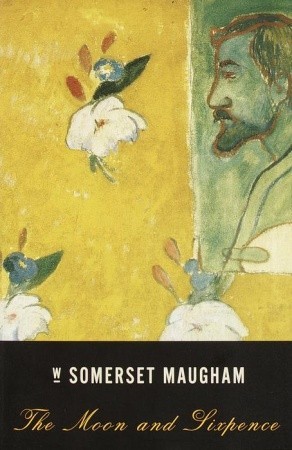
This is the quote that made me pick up my first Maugham novel.  He used Paul Gauguin's life as inspiration for The Moon and Sixpence.  This particular novel is a great look at the passion and genius of an artist, and I liked it so much I went on to read the rest of Maugham's books.


Up at the Villa reads the fastest.  Rosie, from Cakes and Ale, is his most memorable character.  Liza of Lambeth's story is the saddest, while the story of Mrs. Craddock is quiet and bittersweet.  Of Human Bondage is his most serious and literary, but I admit, it's not my favorite.  I prefer Maugham's shorter novels. In fact, The Magician, with the naive and beautiful Margaret Dauncey, the sinister Oliver Haddo, and intrepid Susie Boyd, just might be my favorite of all his novels. It's the one I chose to reread recently ... and I liked it as much the second time around as I did the first.  If you haven't yet read W. Somerset Maugham, give one of his novels a try. He just might surprise you.


Happy Reading!


Monday, October 16, 2017

Agnes Grey

"How delightful it would be to be a governess! To go out into the world; to enter upon a new life; to act for myself; to exercise my unused faculties; to try my unknown powers; to earn my own maintenance, and something to comfort and help my father, mother and sister, besides exonerating them from the provision of my food and clothing; to show papa what his little Agnes could do; to convince mamma and Mary that I was not quite the helpless, thoughtless being they supposed. And then, how charming to be intrusted with the care and education of children!"
But the realities of being a governess soon dispel all of Agnes's hopes and bright optimism. Because the children don't mind, and their parents aren't supportive or welcoming, and she doesn't fit with the family and their friends, or with the servants.
"My task of instruction and surveillance, instead of becoming easier as my charges and I got better accustomed to each other, became more arduous as their characters unfolded. The name of governess, I soon found, was a mere mockery as applied to me..."
And that's just the beginning! After her first disastrous position, Agnes goes to work for the Murray family as their governess and her story really begins. Not that her job there is a shining success. (She's a little too passive to ever be that.) But she bravely endures the trials of genteel poverty and the struggles and frustrations of governessing and finds her own happiness in the end.

Agnes Grey reads like a first novel:  it doesn't have the depth of Jane Eyre; it's not as well-crafted as The Tenant of Wildfell Hall; and it's a little lacking in plot. But for all its weaknesses, it has its own merits. And I liked it. Anne Bronte shows from personal experience what it's like to be a governess in less than ideal circumstances. (And her language and vocabulary--wow!) Agnes's real struggles with her "little tormentors" and "the vexatious propensities of my pupils" made me laugh in sympathy. Although at times I found myself wishing she'd grow a spine and be just a little more assertive and confident. But Bronte had other designs for her character. This will never be my favorite Bronte novel, but I'm very glad I read it. It made me wish that Anne hadn't died so young. Think of what she could have written if she'd lived longer!

Happy Reading!

Monday, December 12, 2016

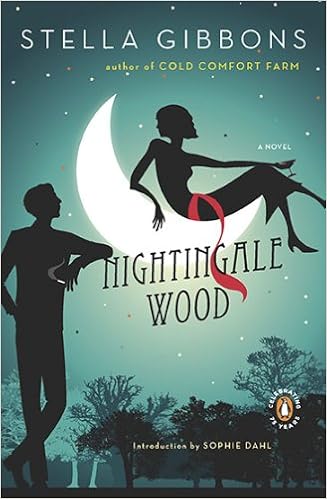
Nightingale Wood by Stella Gibbons

 "No one would come to live at The Eagles for fun."

The only reason Viola Withers has come to stay with her in-laws at The Eagles just outside Chesterbourne in Essex, England, is because she's recently widowed, she's penniless, and she has nowhere else to go. If only her Shakespeare-loving father were still alive, or her father-in-law weren't such a gloomy miser, or her two sisters-in-law, Madge and Tina, were closer to her own age and more lively. But everyone at The Eagles seems so old (except for Saxon, the handsome chauffeur), and nothing exciting ever happens there. Still young, and not exactly grieving for her dead husband, Viola can't stop daydreaming about someday meeting Victor Spring, their rich, attractive neighbor. But she's not in his league. She's also not the kind of girl that boys ever seem to notice. Still, a girl can dream. After all, every Cinderella should get her chance at a happy ending.
"The room seemed full of brilliant sunlight and the song of the blackbirds in the garden sounded so loud and sweet that she wanted to sing too. She was going to the Ball! and He would be there! She would wear her silver dancing shoes again and have her hair waved, and get some new pearl earrings from Woolworth's (no one would know they came from Woolworth's. Of course, you always knew when other people's ear-rings came from Woolworth's but they never guessed about yours). Perhaps he would dance with her; a waltz, slow and dreamy, or quick and exciting."
Stella Gibbons not only excels at creating endearingly eccentric characters, but at weaving together their rather unremarkable and ordinary lives into a story that is charming, witty, poignant, satiric and never dull. She referred to Nightingale Wood, which was written in 1938, as a "Romantic Comedy" and it is, with some great slang-y dialogue and a few unexpected twists along the way. I enjoyed it almost as much as I did Cold Comfort Farm. Gibbons doesn't take herself or her stories too seriously, which is refreshing. They're simple, fun reads from start to finish. So if you like the novels of Barbara Pym or Elizabeth Gaskell with just a hint of F. Scott Fitzgerald, I think you'll like this one, too.

Happy Reading!  
Sunday, November 13, 2016

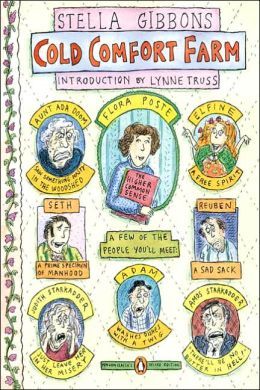
Cold Comfort Farm

"The education bestowed on Flora Poste by her parents had been expensive, athletic and prolonged; and when they died within a few weeks of one another during the annual epidemic of the influenza or Spanish Plague which occurred in her twentieth year, she was discovered  to possess every art and grace save that of earning her own living."

With only one hundred pounds a year to her name, Flora Poste decides to see how long she can live off of her relatives. That's how she ends up in Howling, Sussex at Cold Comfort Farm at the home of her Starkadder cousins. Their farm is well-named and apparently carries a curse. The Starkadders themselves are an eccentric, dismal bunch, from old Aunt Ada Doom who never leaves her room upstairs, to young unschooled Elfine who runs wild across the Downs. Then there's Flora's cousin, Judith, who hints at a wrong done to Flora's father sometime in the past, but who won't say what it was or when it happened. Despite all of this, Flora is determined to "tidy up life at Cold Comfort" and make it better for everyone.

Her campaign meets with some resistance at first, but Flora is nothing if not persistent. She's also spirited, self-assured, and thinks she knows what's best for the Starkadders. ALL the Starkadders! I liked her confidence and pluck. I also ended up liking Cold Comfort Farm quite a lot. It's such a fun and witty novel. I enjoyed watching Flora's well-meaning schemes and machinations play out. Plus, the ending is great. It makes me wonder why more people don't read Stella Gibbons. I don't think I've ever heard anyone say, "Cold Comfort Farm is one of my favorite novels." Which is sad. Because it should be. It's definitely become one of mine.

Happy Reading!

Thursday, August 4, 2016

A classic bookish adventure...

 "Any voyage can begin! But where and how it finishes is the important part."

First published in 1883, Jules Verne's novel Godfrey Morgan: A Californian Mystery was also published under the title School for Crusoes. And I have to admit I had never even heard of this particular Verne novel until my niece told me she'd read it and liked it. So, since I like Jules Verne, and I value my niece's opinion, I decided to read it, too.

At age 25, Godfrey Morgan isn't quite ready to get married. He wants to travel, and have adventures. Be Robinson Crusoe. So, with his fiancee's support, and on his uncle's dime, he boards a steamship intent on traveling around the world. But in the middle of the Pacific Ocean, a storm arises, his ship sinks, and Godfrey finds himself shipwrecked on an uninhabited island with only Tartlet, his fiancee's dancing master, for company.
"...he set foot on the land where there probably awaited him, if not early death, at least a miserable life worse than death. Hunger, thirst, cold, and nakedness, and perils of all kinds; without a weapon of defence, without a gun to shoot with, without a change of clothes--such the extremities to which he was reduced. How imprudent he had been! He had been desirous of knowing if he was capable of making his way in the world under difficult circumstances! He had put himself to the proof! He had envied the lot of a Crusoe! Well, he would see if the lot were an enviable one."
What follows is a delightful comedy of errors as Godfrey and Tartlet try to make fire, find food, create a shelter, and survive the elements and the strange animals they discover on the island, all while channeling the spirit of Robinson Crusoe. This is probably one of Verne's more light-hearted novels. And I thoroughly enjoyed it. Godfrey is a stalwart, good-hearted character who never gives up, even when things look grim. There isn't a lot of suspense about whether or not he'll survive because the "twist" at the end is apparent right from the beginning, but that only adds to the fun. This novel makes me want to read the rest of Jules Verne's "Voyages Extraordinaires".

Happy Reading!

Thursday, June 30, 2016

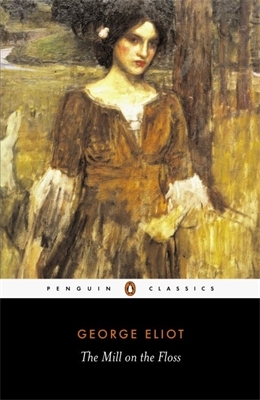
The Mill on the Floss

At the heart of George Eliot's novel is young Maggie Tulliver and her brother, Tom. Their father is a simple mill owner who loves his "dark-eyed, demonstrative, rebellious girl" and hopes to improve his son's lot in life with a good education. But life in an Eliot novel doesn't always go as planned. Mr. Tulliver loses his mill on the Floss in a court case to Mr. Wakem, and when he dies, Maggie and Tom don't have much beyond each other, and their three officious aunts. (They actually have a fourth aunt who is kind, but very poor having eight children of her own.)

The two Tulliver children are a study in contrasts. Maggie is clever and impulsive; she often acts rashly, then as quickly repents. She has a passionate nature, intense feelings, and a need to love and be loved. Tom, on the other hand, is not as clever or sensitive as his younger sister, though he is handsome. Honor and respectability matter to him. And he has a strong sense of justice and of his own rightness, which, at times, can make him a bit cold and heartless. But he does love his sister.

As Maggie grows into a lovely young woman, two men fall in love with her. Only the first is Wakem's son, a young man that Maggie has promised her brother never to speak to again, and the second is her cousin's fiancee. Though grown up, Maggie is still impulsive and passionate, and she struggles to reconcile her feelings for these two young men with what she feels she owes both her brother and cousin.
"...life is very difficult! It seems right to me sometimes that we should follow our strongest feeling ... But I see there are things we must renounce in life; some of us must resign love. Many things are difficult and dark to me, but I see one thing quite clearly:  that I must not, cannot, seek my own happiness by sacrificing others."
In The Mill on the Floss, Eliot manages to chronicle two ordinary, rather provincial lives from childhood into adulthood and make them extraordinary.  Especially Maggie's. Though sad, her story is memorable and moving. And while I can't say that she's my favorite literary heroine, I will never forget her.
Maggie's destiny, then, is at present hidden, and we must wait for it to reveal itself like the course of an unmapped river; we only know that the river is full and rapid, and that for all rivers there is the same final home.
This is the last of my June rereads, so it's on to new books next week. 

Happy Reading!

Saturday, June 18, 2016

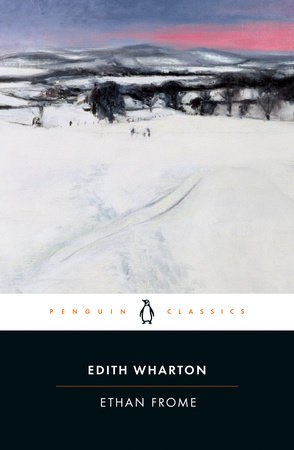
Ethan Frome

Ethan Frome drove in silence ... he seemed a part of the mute melancholy landscape, an incarnation of its frozen woe, with all that was warm and sentient in him fast bound below the surface; but there was nothing unfriendly in his silence. I simply felt that he lived in a depth of moral isolation too remote for casual access, and I had the sense that his loneliness was not merely the result of his personal plight ... but had in it the profound accumulated cold of many Starkfield winters.

As much as I love Edith Wharton's writing is how much I didn't love Ethan Frome the first time I read it. Which is why I felt the need to give it a second chance. It's not a long novel, and there are really only three main characters:  Ethan Frome, Zeena, his grim and ailing wife whose "fault-finding was of the silent kind", and Mattie Silver, his wife's younger cousin whose coming to their house to help Zeena out brought "a bit of hopeful life (that) was like the lighting of a fire on a cold hearth" to Ethan's dreary existence. The harsh Massachusetts winter also plays an important role in this tragic tale.

Ethan's life is a series of misfortune, struggle, and bad luck. Even his marriage is a disappointing mistake. Only in Mattie does he glimpse a sympathetic companion and the hope of some future happiness. But Zeena's penchant for "complaints and troubles" makes even that dream impossible. And that leads to tragedy. As I reread this book last week, I felt only sympathy for Ethan Frome. He deserved better than what he got, but life can be hard and unfair. This is such a sad novel, but it's so beautifully written. And while it will never be my favorite, I do like it more than I did. Mostly because of Wharton's artistry and skill--her writing is so stylish and elegant--but also because this second time reading Ethan Frome helped me to appreciate it, and him, a little bit more.

Happy Rereading!

Wednesday, June 15, 2016

Revisiting Oz...

The fourteen Oz books written by L. Frank Baum dominated the reading landscape of my childhood. We owned seven of them; the library had the rest. My favorites were Tik-Tok of Oz, Ozma of Oz, Glinda of Oz, The Emerald City of Oz, and Dorothy and the Wizard in Oz. But I chose to reread Rinkitink in Oz for two reasons:  first, it's the one Oz book I've read the least; in fact, I only remember reading it once; and second, this classic children's book was written in 1916 making it 100 years old this year!

"Wherein is recorded the Perilous Quest of Prince Inga of Pingaree
and King Rinkitink in the Magical Isles that lie beyond the Borderland of Oz"

I remembered three things about this book: there's a prince named Inga, an island called Pingaree, and three magic pearls--pink, blue, and white--each with a different power. What I forgot is that Prince Inga's parents and the rest of the islanders are captured and taken away from Pingaree by warriors from the North, so Inga, roly-poly King Rinkitink, and an argumentative talking goat name Bilbil must rescue them with the help of the magic pearls. Of course, there are complications. Inga loses the pearls, and then his parents are taken prisoner by the Nome King. But with the help of Bilbil, Dorothy, and the Wizard of Oz, all is made right in the end. (Sorry to spoil the surprise, but ALL Oz books have happy endings.)

Revisiting Oz is like revisiting my childhood:  all that magic and wonder. In Oz, books grow on trees, animals can talk, wishes come true, and Nome Kings are easily defeated with a few eggs. Makes me want to pull out my box of Oz books and reread the rest. Or maybe I should reread all the Harry Potter books instead; they're full of magic and wonder, too. 

Happy Reading!

Related Post:

Thursday, June 2, 2016

Celebrating Thomas Hardy...

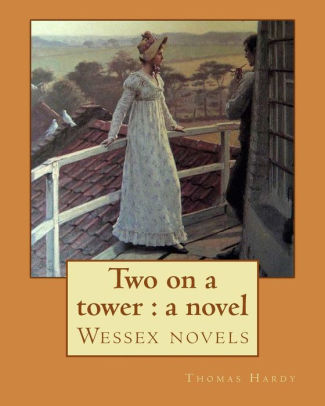
Two on a Tower

Swithin St. Cleeve is a young man interested in the stars. Lady Viviette Constantine is not quite a wife or a widow; her husband, Sir Blount Constantine, has been missing in Africa for years. Before he left, Viviette made him a promise to live as a nun until his return. But then she meets Swithin at the top of the tower where he has set up his telescope. And what starts as an innocent friendship soon deepens.

"The mental room taken up by an idea depends largely on the available space for it as on its essential magnitude:  in Lady Constantine's life of infestivity, in her domestic voids, and in her social discouragements, there was nothing to oust the lightest fancy. Swithin had, in fact, arisen as an attractive interpolation between herself and despair."
For propriety's sake, Viviette determines to keep her feelings hidden.  But then she gets word of her husband's death, and her love for Swithin comes to light. Because of the difference in their ages, and Viviette's desire not to hinder Swithin's study of astronomy, they embark on a secret marriage. And then, as in all of Hardy's novels, other complications arise:  the unexpected arrival of Viviette's brother, the death of Swithin's great uncle and the stringent conditions of his will, and the bachelor Bishop who suddenly decides he wants to marry Viviette himself. It soon seems like Viviette and Swithin will never get their happy ending. But then happy endings and Thomas Hardy rarely go together.

One of the things I like best about Thomas Hardy is his honest portrayal of women and how their lives were so often limited by their circumstances. Viviette finds her choices limited by her sex, her marriage, her age, her poverty ... and finally by her own sense of what she owes to Swithin and his own promising future. So she denies her own happiness. Which made me sad ... and a little frustrated. But that's Thomas Hardy. I really wanted Viviette and Swithin to defy fate and find their own fairy tale ending. Because I liked them. But fate is rarely that accommodating.

Did I like this novel?  Yes!    Is it sad?  A little.   Would I read it again? Definitely.
Do you know what else I liked about it? All the great words Thomas Hardy so masterfully weaves together--words like:  efts, infestivity, weir-hatch, and irrefragable.  Whenever I finish reading a Thomas Hardy novel I always feel a little smarter. I'm looking forward to diving into Far From the Madding Crowd this summer.

Happy Birthday, Thomas Hardy!
(And happy reading.)


Wednesday, October 21, 2015

Rereading Dracula...

The impulse to reread this classic novel came while I was reading Cat Winters' The Cure For Dreaming. It's a YA novel set in 1900 and her main character, Olivia Mead, loves Dracula and has read it several times; and the more she referred to it, the more I wanted to read it again myself.

Out of all the classics I've read, Dracula is one of my top ten. First of all, I love epistolary novels; and the way Stoker spins out the mystery of Count Dracula through the diaries and letters of Jonathon and Mina Harker, John Seward, Lucy Westenra and others is masterful. When I read this book I feel like I'm watching a movie play out in my head. I also really like the eerie atmosphere and the quiet build-up of suspense...especially where Lucy is concerned. Then there's Mina Harker--Mina is intelligent, beautiful and brave, and one of the most memorable female characters ever created. And let's face it, no one writes vampires better than Bram Stoker:
"As we burst into the room the Count turned his face, and the hellish look that I had heard described seemed to leap into it. His eyes flamed red with devilish passion; the great nostrils of the white aquiline nose opened wide and quivered at the edge; and the white sharp teeth, behind the full lips of the blood-dripping mouth, champed together like those of a wild beast. With a wrench, which threw his victim back upon the bed as though hurled from a height, he turned and sprang at us."
Happy Reading!