Wednesday, August 12, 2015

Another Pym...

"...everyone knew that people in villages were different."


Barbara Pym's last novel, A Few Green Leaves, is about life in a West Oxfordshire village. Emma Howick, a single anthropologist in her thirties, has come to this village to do some research for her next paper and observe the customs and characters living in this village. And there are plenty of characters:  Tom, the widowed rector, "who might sill marry again"; Daphne, the rector's single sister, who dreams of living in a white-washed Greek cottage somewhere on the Aegean; old Dr. G. who prefers his patients to be young, and young Dr. Shrubsole, who has an interest in geriatrics; Graham Pettifer, Emma's ex-lover, who unexpectedly turns up at the village to work on his next book; and Miss Lee, Miss Grundy, and Miss Lickerish, the bevy of spinsters that seem to be a given in any Barbara Pym novel. As Emma observed, "There was obviously material for note here." And the possibility of romance as well.

While there's no mystery or psychological suspense in a Pym novel, there is humor and characters to which you quickly become attached. A Few Green Leaves follows life in a small English village over a summer. It's charming, well-written, and thoroughly enjoyable. Pym does it again! I've read four other Pym novels: Excellent Women, Some Tame Gazelle, Jane and Prudence, and Quartet in Autumn.  They are all worth checking out.

Happy Reading!

Saturday, August 8, 2015

Around the World in 8 Books...

When taking a bookish trip around the world you have basically two options: fiction or non-fiction. Each itinerary offers a wide range of possible destinations; what books you choose all depends on where you want to go. Imagine, in just 8 books you can circumnavigate the globe!

Here's the fictional around-the-world trip I wouldn't mind taking:

  1. London Falling by Paul Cornell
  2. Salaam, Paris by Kavita Daswani
  3. The Storyteller of Marrakesh by Joydeep Roy-Bhattacharya
  4. Appointment in Venice by Sally Stewart
  5. Treasure of Egypt by Barbara Ivie Green
  6. The Painter From Shanghai by Jennifer Cody Epstein
  7. The Bali Mystery by Linda Clarke
  8. Galapagos Regained by James Morrow
My non-fiction trip looks a little different, but it still includes 8 amazing bookish destinations:
  1. The Piano Shop on the Left Bank by Thad Carhart
  2. A Labyrinth of Kingdoms: 10,000 Miles Through Islamic Africa by Steve Kemper
  3. Visit Sunny Chernobyl by Andrew Blackwell
  4. I'll Call you in Kathmandu: the Elizabeth Hawley Story by Bernadette McDonald
  5. Hitchhiking Vietnam by Karin Muller
  6. Alone in Antarctica by Felicity Aston
  7. Lost in the Amazon by Stephen Kirkpatrick
  8. Missoula by Jon Krakauer
I'd rather have real stamps in my passport, but until I can afford an actual trip around the world, bookish travel will have to do.

Happy Reading!

Tuesday, August 4, 2015

The Coolest Race on Earth

"...the emergence of exotic marathons, from Antarctica to the Sahara desert, reflects a restless energy and a desire on the part of many runners to keep pushing boundaries further and further. But it's also simply an interesting way to see interesting places."

The Coolest Race on Earth: Mud, Madmen, Glaciers, and Grannies at the Antarctica Marathon by John Hanc tells the story of this crazy marathon, the guy who started it, and the people who come to race it. Hanc also gives you a bit of marathon history and Antarctica exploration trivia. I've never wanted to run a marathon myself, but I admire those who commit to, and complete, such an arduous task. And the runners who travel to the farthest end of the earth to run 26.2 miles? Well, they are their own interesting breed. This book was an entertaining read that almost made me want to go to Antarctica, too. Here's a snippet from the author about why he chose to run the "Last Marathon":
It was time to get out of this funk and into a new frame of mind. A trip to Antarctica is a great remedy for this, provided you're not planning to spend the dark winter there, which, as numerous studies and several gory murders on remote scientific stations have proven, can drive you insane. Many compare the whiteness of the place to the blank page on a new chapter in one's life. 

Happy Reading!


Another great read:
     Swimming to Antarctica: Tales of a Long-Distance Swimmer by Lynne Cox

Friday, July 31, 2015

My Twelfth TBR...

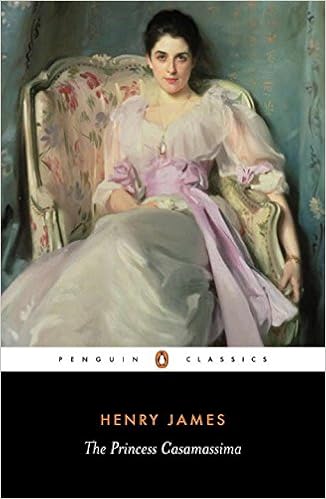
Disclaimer:  I love Henry James. Ever since I first read The Portrait of a Lady I have been an unapologetic fan of his writing. So, I am not objective when it comes to his books; in fact, you might say I am predisposed to like whatever he writes. Including this novel:


The Princess Casamassima by Henry James is about a boy named Hyacinth Robinson. His mother, an unmarried French dressmaker, murders his father, an English nobleman, when he is just a baby. Hyacinth  is raised in poverty by a kind-hearted but humble dressmaker; he grows up hating the sordity of his surroundings, and the ugliness and ignorance of those around him, and longs for a better, finer existence.
"By the nature of his mind he was perpetually conscious that the circle in which he lived was an infinitesimally small, shallow eddy in the roaring vortex of London, and his imagination plunged again and again into the waves that whirled past it and round it, in the hope of being carried to some brighter, happier vision -- the vision of societies in which, in splendid rooms, with smiles and soft voices, distinguished men, with women who were both proud and gentle, talked about art, literature, and history."
As a young man he befriends some revolutionary idealists consumed with injustice, class warfare, socialism, and fighting for the downtrodden masses against those in power. (Although for most of the book they're more talk than action.) Hyacinth gets drawn into their radical politics and, in a rash moment of youthful fervor, makes a "sacred vow" to assassinate a major political figure when called upon. But it's the dazzling Princess Casamassima, also caught up in the "Great Social Cause", who really impacts Hyacinth's life. In her brilliance and beauty he finally finds the world he's been searching for (although it seemed to me that she was using him as a stepping stone to something, or someone, greater; I had a hard time liking her as much as Hyacinth did). Things go wrong for Hyacinth when his radical leanings start to conflict more and more with his own vision of the world and all the good that he sees in it, and he soon comes to regret the vow he made.

Honor, integrity, and nobility of character always play an important role in James' novels; his characters are often tormented by their own internal struggles and the choices they are forced to make, which means his endings are rarely happy. The Princess Casamassima is no exception. This novel is a tragedy. And while it will never be my favorite Henry James novel, I think Hyacinth Robinson will linger in my mind for awhile. The biggest plus of finishing this book is that, at 590 pages, it qualifies as my "Very Long Classic Novel" in Karen's Back to the Classics Challenge.

Happy Reading!


My four favorite Henry James novels: 
  1. The Portrait of a Lady
  2. The Wings of the Dove
  3. The Awkward Age
  4. The American

Monday, July 27, 2015

A Bookish Quiz...

Here are my answers to five random questions that are unapologetically bookish; what would your bookish answers be?

1. If you could have lunch with any dead author (miraculously brought back to life for the occasion) who would it be?
Bram Stoker...because I'm not scathingly witty enough 
to lunch with Dorothy Parker.

2. Which fictional character would you love to hang out with?
Nancy Drew

3. If you could jump into any book and temporarily trade lives with one of its characters, who would you choose?
Elizabeth Bennett

4. If you could visit any fictional setting, where would you go?
I'd love to spend the day shopping in Diagon Alley...maybe buy
some chocolate frogs, or a wand, or my very own owl... and then
I'd like to visit Honeydukes and Hogwarts.

5. Which fictional leading man (or lady) would you like to sped a romantic evening with?
Francisco d'Anconia

Happy Reading!

Thursday, July 23, 2015

Two Fun Reads

The Daring Ladies of Lowell by Kate Alcott
"Alice pulled back the covers, easing herself into bed... The most important day of her life was almost over, and she wanted now only to rest. She had done it, she had made the leap. No more cleaning up cow dung, no more twisting the neck of squawking chickens. She was a factory girl now; she'd soon be working the looms and making money. Tomorrow it would begin."
Things I loved about this book:  Alice Barrows, Lovey Cornell and the other spunky mill girls; the 1832 Lowell, Massachusetts setting; Samuel Fiske, the mill owner's responsible oldest son; and the scandalous mystery and historical trial surrounding the murder of one of the mill girls. From start to finish, this novel was a pleasure to read. (And the ending will make you smile.)


The Art Forger by B. A. Shapiro

Claire Roth is an artist who has just been offered an amazing chance to exhibit her own pieces in a high-end Boston gallery, but there's a price...one she isn't sure she wants to pay.
"My own show. The sweet possibility of reclaiming all that's been lost, everything I've ever wanted. But a forger? A pretender? The absolute last thing I want to be."
Things I loved about this book:  delving into the world of art and oil painting, forgeries, Degas and the still unsolved mystery of the Isabella Stewart Gardner Museum art heist. Shapiro does an excellent job of mixing fact with fiction in this clever mystery. The Art Forger is captivating fun.

Happy Reading!


Sunday, July 19, 2015

Miss Marjoribanks

I was a bit apprehensive about reading this particular classic. There seemed to be more unfavorable reviews of it than favorable, and I was worried I might not like it. Happily for me, however, it turned out to be not only an enjoyable read, but a surprisingly funny one, too. Miss Marjoribanks by Margaret Oliphant is like a cross between Jane Austen's Emma and Elizabeth Gaskell's Cranford. It's heroine, 19-year-old Lucilla Marjoribanks, has been away at school, but now she's returned home to Carlingford with decided views about society and her father and her own duty to both.
"...the Doctor's daughter was not a mild young lady, easy to be controlled; but, on the contrary, had all the energy and determination to have her own way ... Lucilla felt more and more that she who held the reorganisation of society in Carlingford in her hands was a woman with a mission."
 She takes charge of her father's household, redecorates the drawing room in colors that complement her complexion so that she'll look especially well when she hosts her Thursday Evenings, and she quickly begins her successful "reign" over Grange Lane. But it's Lucilla's views on men, religion, marriage, and her own importance in society that really made me smile.  Here are four examples:

In such work as hers, a skillful leader is always on the outlook for auxiliaries; and there are circumstances in which a nice clergyman is almost as useful to the lady of the house as a man who can flirt.
For everybody knows that it requires very little to satisfy the gentlemen, if a woman will only give her mind to it." 
...(she) had been brought up in the old-fashioned orthodox way of having a great respect for religion, and as little to do with it as possible...  
 "I don't see the good of single women," said Lucilla, "unless they are awfully rich..."
I ended up really liking Miss Marjoribanks.  There's one sad thing that occurs in the second half of this book, but overall this classic novel not only made me smile, but on several occasions, it actually made me laugh out loud. I got the definite feeling that Oliphant was poking fun of Victorian society with Lucilla's egocentric yet "magnanimous" views of society and Carlingford's submission to this determined heroine, which is why I'm counting this book as my Humorous or Satirical Classic for Karen's Back to the Classics Challenge.

Happy Reading!