Happy First Day of Summer!
Monday, June 20, 2016
Saturday, June 18, 2016
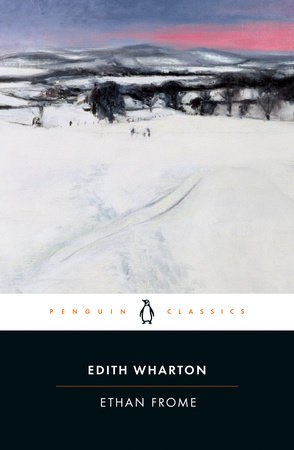
Ethan Frome
Ethan Frome drove in silence ... he seemed a part of the mute melancholy landscape, an incarnation of its frozen woe, with all that was warm and sentient in him fast bound below the surface; but there was nothing unfriendly in his silence. I simply felt that he lived in a depth of moral isolation too remote for casual access, and I had the sense that his loneliness was not merely the result of his personal plight ... but had in it the profound accumulated cold of many Starkfield winters.
As much as I love Edith Wharton's writing is how much I didn't love Ethan Frome the first time I read it. Which is why I felt the need to give it a second chance. It's not a long novel, and there are really only three main characters: Ethan Frome, Zeena, his grim and ailing wife whose "fault-finding was of the silent kind", and Mattie Silver, his wife's younger cousin whose coming to their house to help Zeena out brought "a bit of hopeful life (that) was like the lighting of a fire on a cold hearth" to Ethan's dreary existence. The harsh Massachusetts winter also plays an important role in this tragic tale.
Ethan's life is a series of misfortune, struggle, and bad luck. Even his marriage is a disappointing mistake. Only in Mattie does he glimpse a sympathetic companion and the hope of some future happiness. But Zeena's penchant for "complaints and troubles" makes even that dream impossible. And that leads to tragedy. As I reread this book last week, I felt only sympathy for Ethan Frome. He deserved better than what he got, but life can be hard and unfair. This is such a sad novel, but it's so beautifully written. And while it will never be my favorite, I do like it more than I did. Mostly because of Wharton's artistry and skill--her writing is so stylish and elegant--but also because this second time reading Ethan Frome helped me to appreciate it, and him, a little bit more.
Happy Rereading!
Wednesday, June 15, 2016
Revisiting Oz...
The fourteen Oz books written by L. Frank Baum dominated the reading landscape of my childhood. We owned seven of them; the library had the rest. My favorites were Tik-Tok of Oz, Ozma of Oz, Glinda of Oz, The Emerald City of Oz, and Dorothy and the Wizard in Oz. But I chose to reread Rinkitink in Oz for two reasons: first, it's the one Oz book I've read the least; in fact, I only remember reading it once; and second, this classic children's book was written in 1916 making it 100 years old this year!
"Wherein is recorded the Perilous Quest of Prince Inga of Pingaree
and King Rinkitink in the Magical Isles that lie beyond the Borderland of Oz"
I remembered three things about this book: there's a prince named Inga, an island called Pingaree, and three magic pearls--pink, blue, and white--each with a different power. What I forgot is that Prince Inga's parents and the rest of the islanders are captured and taken away from Pingaree by warriors from the North, so Inga, roly-poly King Rinkitink, and an argumentative talking goat name Bilbil must rescue them with the help of the magic pearls. Of course, there are complications. Inga loses the pearls, and then his parents are taken prisoner by the Nome King. But with the help of Bilbil, Dorothy, and the Wizard of Oz, all is made right in the end. (Sorry to spoil the surprise, but ALL Oz books have happy endings.)
Revisiting Oz is like revisiting my childhood: all that magic and wonder. In Oz, books grow on trees, animals can talk, wishes come true, and Nome Kings are easily defeated with a few eggs. Makes me want to pull out my box of Oz books and reread the rest. Or maybe I should reread all the Harry Potter books instead; they're full of magic and wonder, too.
Happy Reading!
Related Post:
Sunday, June 12, 2016
Bookish Art for June...
Thursday, June 9, 2016
Jacob's Room
The blurb on the back of Jacob's Room describes it this way:
"Poetic and nearly plotless, this groundbreaking novel focuses on a flow of random impressions through the minds of its characters. Jacob's Room was Virginia Woolf's first stream-of-consciousness novel--nonlinear and experimental, with an ending that is among the most moving in all of English literature."Which makes this novel interesting to read, but hard to summarize. The story swirls and eddies around Jacob Flanders, beginning when he's a child collecting butterflies and playing at the seashore with his brothers, to his years at Cambridge arguing Greek philosophy with his friends, to when he's living on his own, presumably working, and falling in love in London, to his travels in Greece when he's just twenty-six. But because of the way this story is told, Jacob remains an elusive, almost ethereal character. We know of him, but we never really get to know him. What I like most about this novel is Woolf's way with words; her writing is lyrical and filled with poetic imagery. I admire how she was always pushing herself as a writer to choose just the right words and to find a new narrative style. For me, Jacob's Room is not as good a Mrs. Dalloway, but it's still a novel worth reading.
But I think I'll let Virginia's words speak for themselves. Here are a few poetic passages from this innovative book:
The waves showed that uneasiness, like something alive, restive, expecting the whip, of waves before a storm ... The wind blew straight dashes of rain across the window, which flashed silver as they passed through the light. A single leaf tapped hurriedly, persistently, upon the glass. There was a hurricane at sea.
"I like Jacob Flanders," wrote Clara Durrant in her diary. "He's so unworldly. He gives himself no airs and one can say what one likes to him, though he's frightening because..." But then, this is only a young woman's language, one, too, who loves, or refrains from loving. She wished the moment to continue forever precisely as it was that July morning. And moments don't.
Jacob went to the window and stood with his hands in his pockets. There he saw three Greeks in kilts; the masts of ships; idle or busy people of the lower classes strolling or stepping out briskly....Their lack of concern for him was not the cause of his gloom; but some profound conviction--it was not that he himself happened to be lonely, but that all people are.
Happy Reading!
Monday, June 6, 2016
Rereading the Classics...
Some books should be read more than once. And lately, I've been wanting to reread some of my favorite books and authors, but I always seem to have a stack of library books that need to be read first. So I've decided that, for the next three weeks, I'm going to take a break from new reads and focus on rereads instead. Especially those classics I've been wanting to revisit for several months now. Here's the short list of books I'm hoping to reread over the next three weeks:
Jacob's Room by Virginia Woolf
Ethan Frome by Edith Wharton
1984 by George Orwell
Rinkitink in Oz by L. Frank Baum
The Mill on the Floss by George Eliot
Invisible Man by H. G. Wells
And something by Willa Cather...I'm just not sure which one yet.
There are other books and authors that I want to reread, of course, but I can't read them all in three weeks. So I'm starting with these. If I have time for more, I might pick up Journey to the Center of the Earth by Jules Verne or What Maisie Knew by Henry James, because I'm kind of in the mood to reread those books, too. After all, as Robertson Davies once said:
"A truly great book should be read in youth, again in maturity, and once more in old age, as a fine building should be seen by morning light, at noon, and by moonlight."
Happy Rereading!
Thursday, June 2, 2016
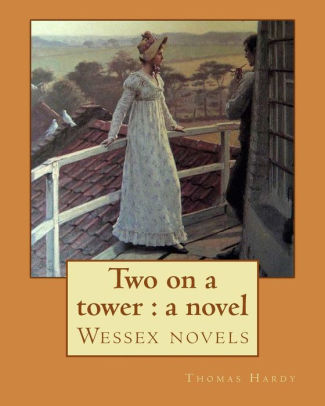
Celebrating Thomas Hardy...
![]() |
| Two on a Tower |
For propriety's sake, Viviette determines to keep her feelings hidden. But then she gets word of her husband's death, and her love for Swithin comes to light. Because of the difference in their ages, and Viviette's desire not to hinder Swithin's study of astronomy, they embark on a secret marriage. And then, as in all of Hardy's novels, other complications arise: the unexpected arrival of Viviette's brother, the death of Swithin's great uncle and the stringent conditions of his will, and the bachelor Bishop who suddenly decides he wants to marry Viviette himself. It soon seems like Viviette and Swithin will never get their happy ending. But then happy endings and Thomas Hardy rarely go together.
"The mental room taken up by an idea depends largely on the available space for it as on its essential magnitude: in Lady Constantine's life of infestivity, in her domestic voids, and in her social discouragements, there was nothing to oust the lightest fancy. Swithin had, in fact, arisen as an attractive interpolation between herself and despair."
One of the things I like best about Thomas Hardy is his honest portrayal of women and how their lives were so often limited by their circumstances. Viviette finds her choices limited by her sex, her marriage, her age, her poverty ... and finally by her own sense of what she owes to Swithin and his own promising future. So she denies her own happiness. Which made me sad ... and a little frustrated. But that's Thomas Hardy. I really wanted Viviette and Swithin to defy fate and find their own fairy tale ending. Because I liked them. But fate is rarely that accommodating.
Did I like this novel? Yes! Is it sad? A little. Would I read it again? Definitely.
Do you know what else I liked about it? All the great words Thomas Hardy so masterfully weaves together--words like: efts, infestivity, weir-hatch, and irrefragable. Whenever I finish reading a Thomas Hardy novel I always feel a little smarter. I'm looking forward to diving into Far From the Madding Crowd this summer.
Happy Birthday, Thomas Hardy!
(And happy reading.)
Subscribe to:
Posts (Atom)