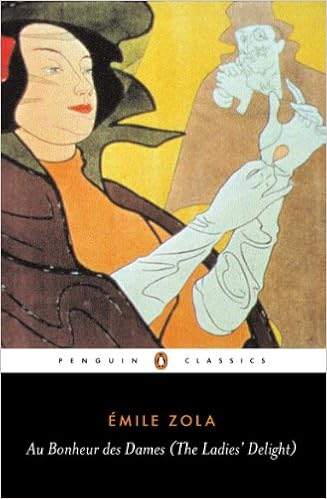
Published in 1883, Au Bonheur des Dames (The Ladies' Delight) by Emile Zola centers around Octave Mouret's dazzling new department store in Paris, and all the lives it effects, both for good and bad. No one has seen anything like Mouret's seductive store which draws in scores of women and convinces them to buy more than they need because the prices are so low, while at the same time driving all the smaller competitors nearby out of business.
Mouret is a brash and energetic man who takes big risks for big rewards, and who loves to charm and 'conquer' his customers...and the other women he meets. And he's not shy about it. "I'm a passionate man, I don't just sit back and let life go by. ... It's wanting something and acting on it, you see, creating something, in short. You get an idea and you fight for it, you hammer it into people's heads, you see it grow and triumph."
Then there's Denise Baudu, a provincial young lady who comes to Paris with her two younger brothers. Needing work, she gets a job at Au Bonheur des Dames as a salesgirl. But life there isn't easy; her first day ends in tears. "From that day on, Denise showed great courage. Beneath her emotional crises, there was an intellect always at work and the bravery of someone weak and alone who was cheerfully determined in pursuit of the tasks she had set herself. She made little fuss, but went directly ahead towards her goal, taking any obstacles in her stride--and she did all this simply and naturally, because her whole nature was in this invincible gentleness. ....Her willingness to endure pain and her dogged determination kept her upright and smiling even when she was on the point of collapse, entirely exhausted by work that would have finished many men."
It is her modesty and gentle sweetness that draws Mouret's interest. His attraction deepens to love. (And almost obsession.) But no matter what he offers her, Denise refuses to become his mistress. Even though deep down, she loves him, too. Their lives revolve around Au Bonheur des Dames and its triumphal success.
Zola had a lot to say about consumerism and instant gratification in this novel, and how one man and one store can manipulate society so easily. But I enjoyed it mostly for his characters and the personal journeys each one takes. In many ways, Denise reminded me of Jane Austen's Fanny Price, quietly determined to do what she believes is right no matter what. Mouret's morals, on the other hand, weren't so admirable, but his business acumen was impressive. No one else believed his department store would be so successful. Except for Denise. These two make quite a pair. And while I found the ending a bit anti-climatic, I ended up liking this French classic (which counts as my Classic in Translation for
Karen's Back to the Classics Challenge.)
Happy Reading!
P.S. The Penguin version I read was ably translated by Robin Buss.