Thursday, June 9, 2016

Jacob's Room


The blurb on the back of Jacob's Room describes it this way:
"Poetic and nearly plotless, this groundbreaking novel focuses on a flow of random impressions through the minds of its characters. Jacob's Room was Virginia Woolf's first stream-of-consciousness novel--nonlinear and experimental, with an ending that is among the most moving in all of English literature."
Which makes this novel interesting to read, but hard to summarize. The story swirls and eddies around Jacob Flanders, beginning when he's a child collecting butterflies and playing at the seashore with his brothers, to his years at Cambridge arguing Greek philosophy with his friends, to when he's living on his own, presumably working, and falling in love in London, to his travels in Greece when he's just twenty-six. But because of the way this story is told, Jacob remains an elusive, almost ethereal character. We know of him, but we never really get to know him. What I like most about this novel is Woolf's way with words; her writing is lyrical and filled with poetic imagery. I admire how she was always pushing herself as a writer to choose just the right words and to find a new narrative style. For me, Jacob's Room is not as good a Mrs. Dalloway, but it's still a novel worth reading.

But I think I'll let Virginia's words speak for themselves. Here are a few poetic passages from this innovative book:
The waves showed that uneasiness, like something alive, restive, expecting the whip, of waves before a storm ... The wind blew straight dashes of rain across the window, which flashed silver as they passed through the light. A single leaf tapped hurriedly, persistently, upon the glass. There was a hurricane at sea.
"I like Jacob Flanders," wrote Clara Durrant in her diary. "He's so unworldly. He gives himself no airs and one can say what one likes to him, though he's frightening because..." But then, this is only a young woman's language, one, too, who loves, or refrains from loving. She wished the moment to continue forever precisely as it was that July morning. And moments don't.
Jacob went to the window and stood with his hands in his pockets. There he saw three Greeks in kilts; the masts of ships; idle or busy people of the lower classes strolling or stepping out briskly....Their lack of concern for him was not the cause of his gloom; but some profound conviction--it was not that he himself happened to be lonely, but that all people are.
Happy Reading!

 

Monday, June 6, 2016

Rereading the Classics...

Some books should be read more than once. And lately, I've been wanting to reread some of my favorite books and authors, but I always seem to have a stack of library books that need to be read first. So I've decided that, for the next three weeks, I'm going to take a break from new reads and focus on rereads instead. Especially those classics I've been wanting to revisit for several months now. Here's the short list of books I'm hoping to reread over the next three weeks:

Jacob's Room by Virginia Woolf
Ethan Frome by Edith Wharton
1984 by George Orwell
Rinkitink in Oz by L. Frank Baum
The Mill on the Floss by George Eliot 
Invisible Man by H. G. Wells
And something by Willa Cather...I'm just not sure which one yet.

There are other books and authors that I want to reread, of course, but I can't read them all in three weeks. So I'm starting with these. If I have time for more, I might pick up Journey to the Center of the Earth by Jules Verne or What Maisie Knew by Henry James, because I'm kind of in the mood to reread those books, too. After all, as Robertson Davies once said:
"A truly great book should be read in youth, again in maturity, and once more in old age, as a fine building should be seen by morning light, at noon, and by moonlight."
 Happy Rereading!


Thursday, June 2, 2016

Celebrating Thomas Hardy...

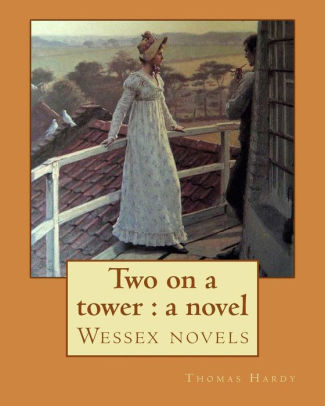
Two on a Tower

Swithin St. Cleeve is a young man interested in the stars. Lady Viviette Constantine is not quite a wife or a widow; her husband, Sir Blount Constantine, has been missing in Africa for years. Before he left, Viviette made him a promise to live as a nun until his return. But then she meets Swithin at the top of the tower where he has set up his telescope. And what starts as an innocent friendship soon deepens.

"The mental room taken up by an idea depends largely on the available space for it as on its essential magnitude:  in Lady Constantine's life of infestivity, in her domestic voids, and in her social discouragements, there was nothing to oust the lightest fancy. Swithin had, in fact, arisen as an attractive interpolation between herself and despair."
For propriety's sake, Viviette determines to keep her feelings hidden.  But then she gets word of her husband's death, and her love for Swithin comes to light. Because of the difference in their ages, and Viviette's desire not to hinder Swithin's study of astronomy, they embark on a secret marriage. And then, as in all of Hardy's novels, other complications arise:  the unexpected arrival of Viviette's brother, the death of Swithin's great uncle and the stringent conditions of his will, and the bachelor Bishop who suddenly decides he wants to marry Viviette himself. It soon seems like Viviette and Swithin will never get their happy ending. But then happy endings and Thomas Hardy rarely go together.

One of the things I like best about Thomas Hardy is his honest portrayal of women and how their lives were so often limited by their circumstances. Viviette finds her choices limited by her sex, her marriage, her age, her poverty ... and finally by her own sense of what she owes to Swithin and his own promising future. So she denies her own happiness. Which made me sad ... and a little frustrated. But that's Thomas Hardy. I really wanted Viviette and Swithin to defy fate and find their own fairy tale ending. Because I liked them. But fate is rarely that accommodating.

Did I like this novel?  Yes!    Is it sad?  A little.   Would I read it again? Definitely.
Do you know what else I liked about it? All the great words Thomas Hardy so masterfully weaves together--words like:  efts, infestivity, weir-hatch, and irrefragable.  Whenever I finish reading a Thomas Hardy novel I always feel a little smarter. I'm looking forward to diving into Far From the Madding Crowd this summer.

Happy Birthday, Thomas Hardy!
(And happy reading.)


Monday, May 30, 2016

Murder, He Wrote ...

Title: Pretty Jane and the Viper of Kidbrooke Lane by Paul Thomas Murphy
First Line: He stumbled upon her at 4:15 on Wednesday morning, April 26, 1871, half an hour before the sun rose, just as definition and color began to bleed into the amorphous black and gray.

My thoughts: This is the true story of murder in Victorian England and the police investigation and trials that followed. It's well-written and oddly compelling. Maid-of-all-work Jane Maria Clouson was seventeen and pregnant when she was viciously attacked and left for dead. The principal suspect in her murder? Edmund Pook, her former employer's twenty-year-old son and Jane's alleged lover. Jane's sad story swept the country as did Pook's arrest and subsequent trial. The author deftly chronicles both. Forensic science was in its infancy in 1871 and I found it interesting what the police could prove, and what they couldn't. Their investigation was far from perfect, but they tried their best to get justice for Jane. I found it sad that they couldn't. Overall, this was a fascinating look at mystery and murder in Victorian England.


Title: Shatter by Michael Robotham
First Line:  It's eleven o'clock in the morning, late September, and outside it's raining so hard that cows are floating down rivers and birds are resting on their bloated bodies.

My thoughts:  Clinical psychologist, Joe O'Loughlin is on the case again when a woman's suicide turns out to be something more. At first the police don't want to believe that there's a serial killer inciting these deaths. Then a second woman dies. The suspense in this psychological thriller really amps up when Joe's investigation puts his own wife and daughter in danger. Once I started this book, I did not want to put it down. Robotham has written another compelling mystery with a white-knuckle ending. I liked it as much as Say You're Sorry and Bleed For Me. (Just watch out for overuse of the F-word.)

Happy Reading!


Friday, May 27, 2016

Bookish thoughts...

On reading days.  In college, we always had a few days between when classes ended and finals began in which to study. We called them "Reading Days". And while I really don't want to go back to college, I wouldn't mind having designated days just for reading in my everyday life when everything else could just come to a stop. Wouldn't that be awesome? One or two days set aside every month just for reading! I would really like that. Wouldn't you?

On commenting.  As much as I love talking books with other bloggers, I sometimes find myself in a commenting slump. No matter how great the bookish post may be, there are days when I can't think of anything better to say than "sounds good" or "great review". It's sad, and a little embarrassing. I mean, who wants to be the person who signs everyone's yearbook with that lame cliched remark: "Have a nice summer"? I blame my sporadic slumps on stress and lack of sleep. So, when another commenting slump comes along, please forgive my lack of creativity and good conversation. It won't last long. Which is a good thing, because chatting about books with other bookish bloggers is what I like best.

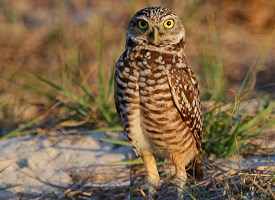
On burrowing owls.  Just saw my first burrowing owl on Antelope Island. Mostly males, because the females are nesting. Soon there will be chicks! I love owls.


Happy Reading!

Tuesday, May 24, 2016

A fun read...

What is it about Westerns?  William W. Johnstone says, "The Western is one of the few true art forms that is one hundred percent American. I liken the Western as America's version of England's Arthurian legends, like the Knights of the Round Table, or Robin Hood and his Merry Men ... it has helped to shape the cultural landscape of America." Most importantly, "the Western is honest. In this great country, which is suffering under the yolk of political correctness, the Western harks back to an era when justice was sure and swift. Steal a man's horse, rustle his cattle, rob a bank, a stagecoach, or a train, you were hunted down and fitted with a hangman's noose. One size fits all."

What I like best about Westerns are the men. The men in Westerns are men of rugged individualism and character. They're strong, and decent, and not afraid to stand up for what's right. Despite their flaws and imperfections, they're heroes. And they sometimes make me wish more real men were like them.


In Those Jensen Boys! the heroes are Ace and Chance Jensen, twin brothers who are quick with a joke, quick with a gun, and even quicker to take up a cause. So when Brian Corcoran and his two lovely (and feisty!) daughters, Bess and Emily, need help against ruthless mine owner, Sam Eagleton, and his hired guns, Ace and Chance Jensen are quick to step into the fray. They may be outnumbered and outgunned, but they won't go down without a fight. This Western has everything a good Western should:  a saloon brawl, a poker game, an ambush, a stagecoach crash, several fist fights, and a final showdown with a hardened gunfighter. Ace and Chance even get to kiss the girls.

This is a fun read. It has action and humor. Bess and Emily are smart and tough and almost as good with a shotgun as Ace and Chance. And the good guys win. The two Jensen brothers reminded me a lot of Louis L'Amour's Sackett clan (though L'Amour does it a little better). I look forward to having more adventures with Those Jensen Boys! 

Happy Reading!


Sunday, May 22, 2016

May's bookish art ...

Winslow Homer -- Girl Reading on a Stone Porch, 1872
"Very few among us read too much; most of us read too little."
--Joseph Fielding Smith